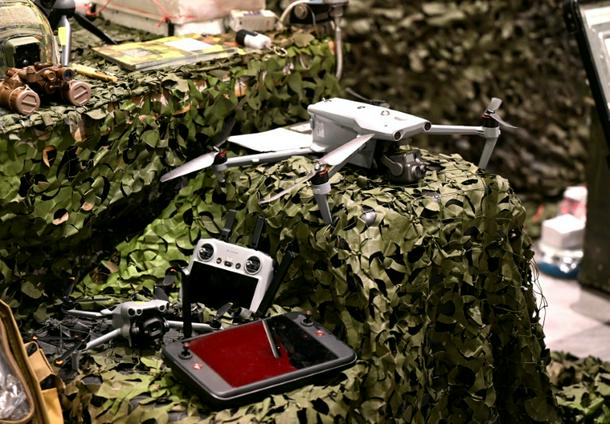
Germany has massively increased its military spending
Berlin (AFP) - The German military has banned the use of Chinese drones for training purposes and is replacing them with European models, the defence ministry said on Wednesday.
Citing the need for data and IT security, the ministry said that “Chinese-made models will no longer be used… and existing systems will be replaced by products from domestic or, where applicable, European sources”.
News magazine Der Spiegel had first reported on the decision, based on worries the drones could transmit data on military exercises, training grounds or weapons systems to Chinese intelligence services.
The ministry said the armed forces, the Bundeswehr, had used “inexpensive, off-the-shelf drones for training purposes” such as target practice, buying them “with minimal bureaucratic effort”.
“To strengthen the Bundeswehr’s self-sufficiency and technological sovereignty, Chinese-made models will no longer be used for target or training purposes,” its statement said.
The development comes with growing concern in Europe about the use of Chinese-made technologies in sensitive sectors, as authorities warn of “hybrid threats” from both Russia and China.
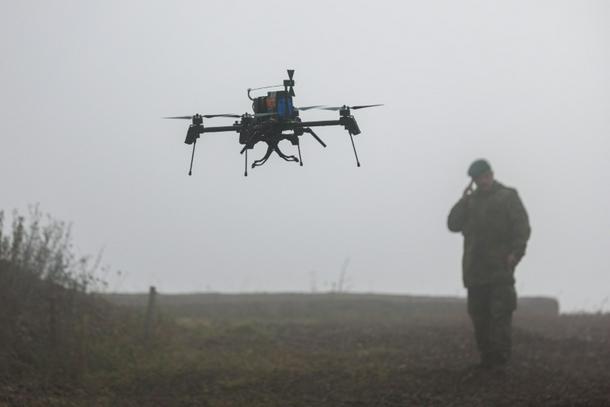
Drone technology has become more important since the start of the war in Ukraine
According to Der Spiegel, the Bundeswehr has also restricted vehicles from Chinese companies such as BYD, Geely and NIO from entering barracks and other facilities due to serious security concerns.
Soldiers who own Chinese models must now park them outside the barracks and enter on foot, the magazine reported.
The ministry confirmed that certain types of vehicles are barred from entering high-security military areas, without specifying whether Chinese models were included on the list.
“All sensors in a vehicle that are suitable for surveillance” can pose a threat to military security, it added, highlighting cameras, radar, microphones and data transmission systems.
- Investment in drones -
The German military, having observed the critical role played by drones on the battlefield in Ukraine, is investing heavily in the procurement of unmanned aerial vehicles (UAVs) from German manufacturers such as Rheinmetall and Helsing.
Defence Minister Boris Pistorius said in 2025 that Berlin was planning to invest 10 billion euros ($11.1 billion) in the technology in the coming years.
However, drones have also become a critical threat to European security in recent years, with UAVs being observed flying over sensitive sites such as airports, military bases and industrial plants in several countries.
In August, a drone laden with explosives was discovered near a Ukrainian cargo aircraft at Germany’s Leipzig-Halle airport, with Berlin subsequently laying the blame on Russia.
German arms companies are also increasingly being targeted in espionage operations as Berlin spends more on defence.
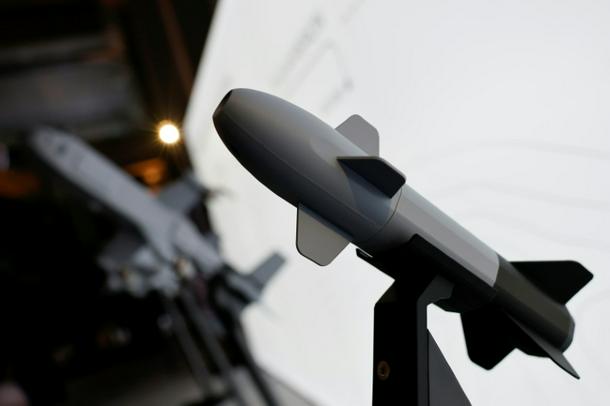
Developing locally made drones is seen as a better way of ensuring security
Max Enders, from Munich-based drone maker Tytan Technologies, told AFP on Tuesday that the company is facing “growing aggressiveness” from Russian and Chinese actors.
Defence tech firm ARX Robotics, also based in Munich, welcomed the Bundeswehr’s decision to ban the use of Chinese-made drones.
Spokesman Florian Taitsch described the move to AFP as an “appropriate response”, warning: “Everyone knows that anything with a network interface can be used to transmit data – on unsecured networks, potentially to third parties you don’t want to send it to.”
While Moscow is seen as the main threat to German security since its 2022 full-scale invasion of Ukraine, several high-profile espionage cases linked to China have been uncovered in the country recently, including the arrest of a married couple in May on charges of spying for Beijing.
Last year, a Chinese national was convicted for passing on information about flight schedules and cargo movements at Leipzig-Halle airport.