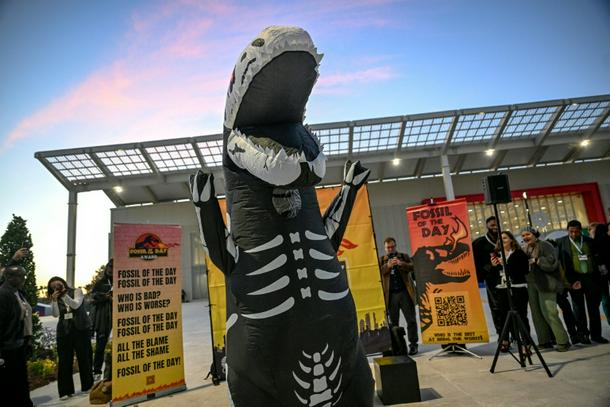
Fossil fuels took centre stage at the UN climate summit where Turkey is seeking pledges to electrify the global economy rather than concrete new commitments to tackle coal, oil and gas.
Antalya (Turkey) (AFP) - UN chief Antonio Guterres on Tuesday urged nations at COP31 to plan for a future without fossil fuels, even as summit hosts Turkey celebrated the discovery of new oil reserves.
Fossil fuels took centre stage at the UN climate summit where Turkey is seeking pledges to electrify the global economy rather than concrete new commitments to tackle coal, oil and gas.
Turkey’s “electrification” push comes as scientists warned that emissions from burning fossil fuels – the primary driver of climate change – were projected to remain near-record highs for another year.
Guterres said “an accelerated transition away from fossil fuels is fundamental” to rein in global temperature rises on track to blow past the 1.5C target in a matter of years.
“Let’s be clear: fossil fuels are not only driving the climate crisis. Dependence on them carries a steep economic and security price as the crisis in the Middle East has laid bare,” he said.
Turkish President Recep Tayyip Erdogan struck a different note on Monday, hailing the discovery of two oil fields – potentially containing 135 million barrels of crude – as “good news”.
The contrast underscored a central challenge facing countries deadlocked over how quickly the world should move away from polluting fuels to cleaner forms of energy.
Since agreeing in 2023 for the first time to transition away from fossil fuels, nations have struggled to advance that goal at the annual COP conferences.
At last year’s COP30 in Brazil, fossil fuels were not explicitly mentioned by name in the final agreement.
No major fossil fuel breakthrough is expected either from this year’s negotiations between nearly 200 nations, which are being hosted by Turkey but chaired by Australia, itself a major coal exporter.
“Expectations are low – that’s just a reflection of reality,” the European Union’s climate envoy Wopke Hoekstra said.
The leaders of a number of major economies are skipping the event, though Swedish climate activist Greta Thunberg made her first COP appearance in several years to slam what she called “greenwashed circuses”.
- Difficult transition -
After the lacklustre outcome last year, Brazil produced a much-anticipated report encouraging each country to choose its own path away from fossil fuels at their own pace.
“My last message is start now… don’t wait. Planning is a good thing,” said COP30 chief executive Ana Toni at an event promoting the voluntary “roadmap”, which is not part of the COP31 negotiations.
Guterres urged countries to draw up plans with clear timelines for exiting fossil fuels: “Now, here at COP31, we must move from discussing the transition to organising it, financing it, and delivering it,” he said.
But many countries – particularly developing economies dependent on oil and gas revenue – have resisted these calls and stressed that each country should go at its own pace.
“We also have the right to develop. We cannot allow those assets to be stranded,” said Antwi-Boasiako Amoah of Ghana, who chairs a group of African nations including oil-rich states.
Adao Soares Barbosa, who chairs the Least Developed Countries bloc, said it would be “very difficult” for the world’s poorest nations to transition to clean energy without significant financial support.
Rather than revisiting this fraught debate, Turkey has sought to unite countries around a global goal to raise the share of final energy demand by electricity from around 20 percent to 35 percent by 2035.
On Tuesday, the hosts unveiled the first draft of this electrification pledge that stresses the use of “clean electricity and technologies” will differ among countries.
Officials from Germany, Ethiopia, Norway and Pakistan voiced support for the Turkish initiative.
Around one-third of electricity is produced using coal and some nations have raised concerns that meeting this increased share with fossil fuels would not achieve climate aims.
“Of course, the cleaner that electrification is, the better it is,” said Hoekstra.