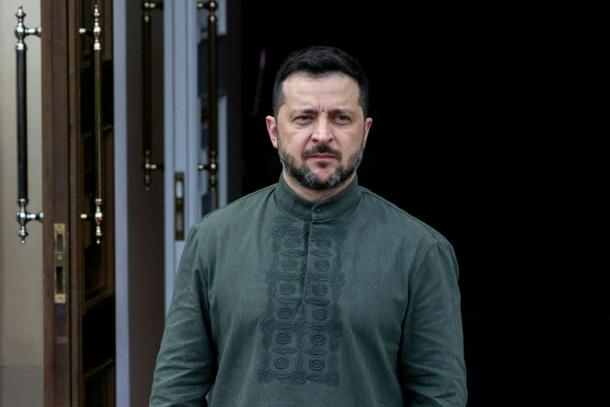
Ukraine's President Volodymyr Zelensky says it is too dangerous to hold an election as the country fights a war with Russia
Kyiv (Ukraine) (AFP) - President Volodymyr Zelensky said in remarks made public Sunday that it would be too dangerous for Ukraine to hold an election while fighting Russia, after a call by his former defence minister to organise a vote.
As he fended off the political pressure, Zelensky announced a new drone deal with Norway, with European leaders arriving for talks ahead of a meeting Monday to discuss how to pressure Russia to end its invasion.
Ukraine has suspended elections under martial law, a measure still widely supported by the population as the country focuses on fighting off the Russian invasion launched in 2022.
The Ukrainian leader has previously faced calls both from Russian President Vladimir Putin and US President Donald Trump to stage a vote, even as Moscow rains down missiles and drones across the country on a daily basis.
“I believe that in a war like this, elections as such are a huge risk,” said Zelensky. “Elections right now are a tsunami for the country that will split Ukraine.
“If we want to destroy the country, then we can move in the direction of elections during these times of war,” he added.
He made the comments Saturday in a briefing with journalists, including from AFP.
- Obstacles to a vote -
Kyiv has been engulfed in a political crisis over the summer, triggered when Zelensky fired popular defence minister Mykhailo Fedorov.
Thousands took to the streets to demand his reinstatement, while Fedorov issued blistering attacks against the army’s top brass.
The row forced Zelensky to sack his commander-in-chief. Then days ago, the ousted Fedorov made a surprise call to find a way to organise elections.
While he did not explicitly state that he wanted to challenge Zelensky, the shock move made even some of his supporters distance themselves.
Experts have cited a flurry of obstacles to staging elections.
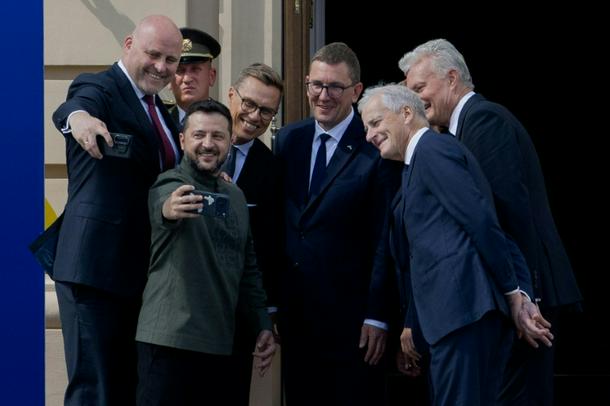
Zelensky received fellow leaders in Kyiv for the Nordic-Baltic Eight summit
They include how soldiers, millions of Ukrainian refugees and people from occupied territories would cast their ballots, as well as the threat of both interference and physical attacks from Russia.
Only 15 percent of Ukrainians believe elections should be held before the end of hostilities, according to an opinion poll.
Zelensky, while having faced increasing pockets of criticism domestically as the war drags on, is still largely popular.
Fedorov’s team confirmed to AFP on Sunday that he plans to visit the United States soon – a trip likely to revive speculation about whether he is positioning himself as a rival to Zelensky.
The former minister was a prominent backer of the drone warfare strategy that has come to dominate Ukraine’s war with Russia, and had pushed for army reforms – winning support among the public.
- Missile deficit -
On Sunday, several European leaders met Zelensky in Kyiv for a Nordic-Baltic summit.
After individual meetings with several of the leaders, Zelensky announced a drone deal with Norway “that strengthens cooperation between our defense sectors”.
Norway’s Prime Minister Jonas Gahr Store told reporters his country had pledged $9 billion to Kyiv for next year.
On Monday, Ukraine’s independence day, Kyiv’s key European backers will meet to discuss Ukraine’s current military problems.
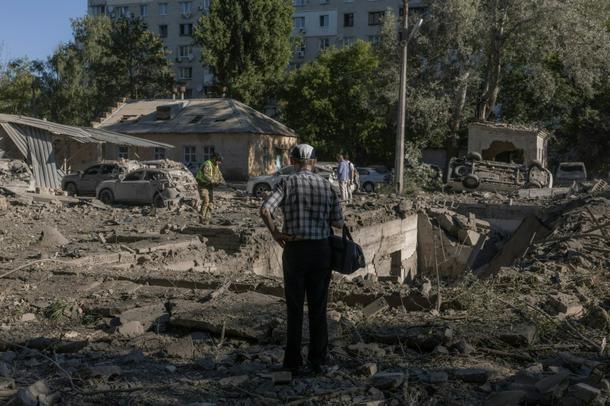
Moscow has intensified its strikes, using hard-to-intercept ballistic missiles that expose Ukraine's air-defence shortfall
Moscow has intensified its strikes, using hard-to-intercept ballistic missiles that expose Ukraine’s air-defence shortfall.
Ukraine, for its part, has accelerated its own campaign of long-range strikes on Russian energy and logistics sites – including oil refineries and retail warehouses.
On Sunday it hit a warehouse belonging to Russian e-commerce giant Ozon for the second day running.
Zelensky said deliveries of crucial interceptor missiles for US Patriot air-defence systems – which can shoot down Russia’s ballistic missiles – had halved since 2023.
The United States faces its own shortfall of the missiles amid its war on Iran and has been resistant to release large numbers to Ukraine.
Civilian deaths in the four-and-a-half-year-long war have surged to their highest since the first months of the invasion amid the uptick in Russian strikes, according to verified statistics from the United Nations.